The Science of High-Quality Thinners in Wood Coatings: How GoodFine Delivers Perfect Finishes
Introduction
In the world of professional wood finishing, every detail matters — from the quality of the coating to the precision of the applicator’s hand. Yet, there’s one essential element that often goes unnoticed but plays a crucial role in defining beauty, durability, and smoothness: the thinner.
A high-quality thinner is more than just a solvent. It’s the scientific bridge that connects coating chemistry with performance. Whether you’re working with Polyurethane (PU) coatings, Nitrocellulose (NC) paints, or melamine-based finishes, the right thinner determines how well the coating spreads, levels, dries, and ultimately performs.
In this article, we’ll explore what makes a good thinner, how it affects coating performance, and why GoodFine Thinners are trusted across India’s wood coating industry for achieving consistently superior results.
1. What Exactly Are Thinners? Understanding the Chemistry
A thinner is a formulated blend of organic solvents that adjusts the viscosity (thickness) of paints and coatings for smooth application. In simple words, thinners make coatings “flow” properly, allowing them to spread evenly and dry to a flawless finish.
Key Roles of a Thinner:
- Dilution: Reduces viscosity for easy spraying or brushing.
- Evaporation Control: Allows the coating to dry uniformly.
- Compatibility: Ensures smooth chemical interaction between resin and pigments.
- Flow & Leveling: Prevents brush marks and bubbles.
- Finish Quality: Enhances gloss and clarity of the final surface.
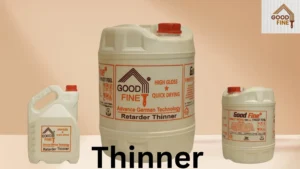
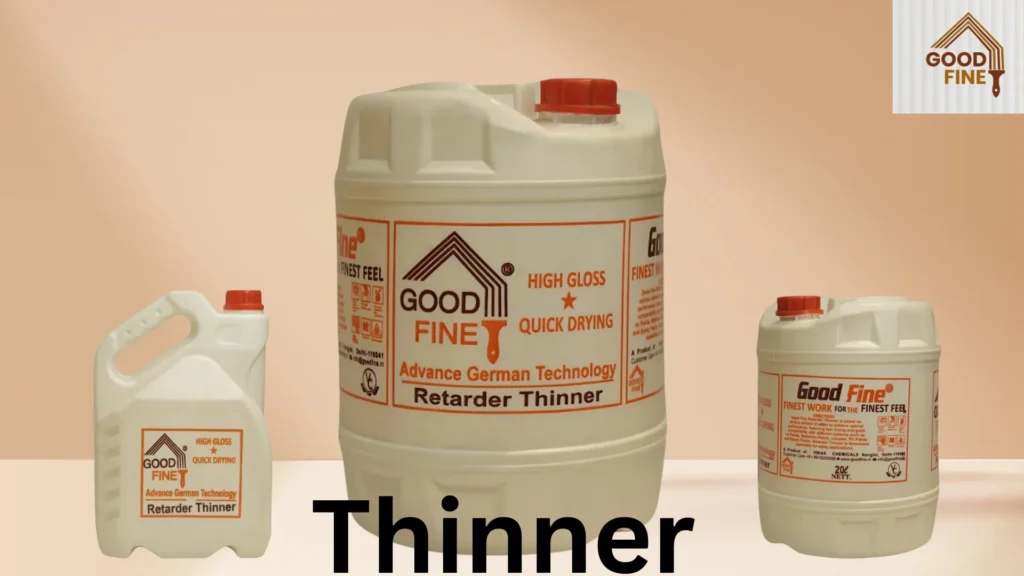
GoodFine Thinners are scientifically balanced with esters, ketones, alcohols, and hydrocarbons — ensuring perfect evaporation control, resin compatibility, and superior leveling in every use.
2. The Science of Evaporation and Drying
Drying in wood coatings isn’t just about time — it’s a controlled evaporation process. A good thinner must evaporate in stages, allowing each solvent component to exit at the right time for smooth film formation.
Types of Solvent Evaporation:
- Fast Solvents (like Acetone): Aid initial flow but can cause surface dryness if overused.
- Medium Solvents (like Butyl Acetate): Balance drying and uniform film build.
- Slow Solvents (like Xylene): Enhance leveling and prevent cracks or pinholes.
A well-balanced thinner such as GoodFine PU Thinner or GoodFine NC Thinner ensures staged evaporation, resulting in:
- Smooth, uniform film
- Enhanced gloss and adhesion
- Reduced blushing or whitening
3. Thinner Compatibility with Different Coatings
Every coating type requires a chemically compatible thinner to ensure proper film formation and adhesion.
| Coating Type | Recommended Thinner | Performance Role |
|---|---|---|
| PU (Polyurethane) | PU Thinner | Balances resin & hardener reaction for better flow |
| NC (Nitrocellulose) | NC Thinner | Quick drying, high gloss finish |
| Melamine Finish | Melamine Thinner | Improves hardness & chemical resistance |
| Sealer Coats | Multi-Purpose Thinner | Adjusts viscosity, aids recoating |
| Acrylic Coatings | Acrylic Thinner | Provides clarity & non-yellowing performance |
GoodFine Industrial Thinners are compatible across all major coating systems — ensuring consistency whether you’re in Jodhpur, Gurgaon, or Bangalore.
4. Problems Caused by Low-Quality Thinners
Using inferior or non-compatible thinners can cause serious surface issues:
- Blushing or Whitening
- Poor Gloss and Dull Finish
- Pinholes or Craters
- Orange Peel Texture
- Weak Film Strength
- Peeling or Adhesion Failure
GoodFine eliminates these issues through multi-stage distillation and purity testing, ensuring consistent evaporation curves and defect-free finishes.
5. Industrial Importance of Premium Thinners
In furniture factories, modular units, and interior finishing workshops, consistency and reliability are key.
A small inconsistency in thinner quality can ruin entire batches of finished panels.
Benefits of GoodFine Thinners:
- Stable performance during mass production
- Optimized drying in humid or cold conditions
- Enhanced intercoat adhesion
- Uniform gloss and color tone
- Compatible with both manual and robotic spray systems
Each GoodFine thinner is engineered for the precision needs of industrial finishing lines.
6. Environmental & Safety Responsibility
GoodFine balances performance with responsibility. All thinners are formulated to reduce VOC emissions, ensure safer flash points, and maintain moisture stability for long-term storage.
With Material Safety Data Sheets (MSDS) provided for every product, GoodFine helps industries maintain safe and compliant work environments.
7. Quality Parameters That Define a Good Thinner
| Parameter | Ideal Standard | GoodFine Advantage |
|---|---|---|
| Purity | ≥ 99.5% | Multi-stage distillation for zero contamination |
| Boiling Range | ±2°C | Uniform evaporation control |
| Evaporation Rate | Balanced | No defects during drying |
| Viscosity Control | Stable | Precision flow for spray lines |
| Odor & Color | Mild, Clear | Refined solvent blend |
| Storage Stability | 12+ months | Additive-stabilized formula |
Every batch undergoes lab testing for blend ratio, density, and evaporation profile, ensuring industrial-grade reliability.
8. How Thinners Influence the Final Finish
| Aspect | GoodFine Thinner | Low-Quality Thinner |
|---|---|---|
| Gloss Level | Uniform High Gloss | Patchy or dull |
| Smoothness | Excellent Leveling | Orange peel surface |
| Adhesion | Tight Bonding | Peeling or flaking |
| Drying | Controlled | Uneven or too fast |
| Color Clarity | Clear and Bright | Yellowing or haze |
| Durability | Long-Lasting | Early wear-out |
A perfect finish isn’t just about the coating — it’s about the precision of the thinner behind it.
9. Application Best Practices
- Mixing Ratio: Follow manufacturer’s ratio (e.g., PU 2:1:1).
- Temperature Control: Use between 20°C – 40°C for optimal flow.
- Humidity Management: In high humidity, use GoodFine PU Slow Thinner.
- Clean Equipment: Regularly use GoodFine NC Cleaner to prevent contamination.
- Avoid Over-Dilution: Maintain correct viscosity with a Ford Cup.
- Layer Application: Apply multiple light coats with proper flash time.
10. Why Choose GoodFine Thinners
- Precision Formulated: Scientifically balanced for consistent flow and gloss.
- Batch Consistency: Identical performance in every barrel.
- Broad Compatibility: Works with all PU, NC, and melamine systems.
- Eco-Friendly: Reduced VOCs and cleaner burn-out properties.
- Trusted Nationwide: Used by top furniture and interior finishers across India.
GoodFine Range Includes:
- PU Thinner
- NC Thinner
- Multi-Purpose Thinner
- Wood Coating Series
- Polish and Sealer Products
GoodFine doesn’t just make thinners — it builds an ecosystem of professional wood finishing solutions.
11. The Future of Wood Coating Solvents
The next era of thinners focuses on:
- Low-VOC, bio-based solvents
- Faster and safer drying technology
- Improved odor control
- Compatibility with waterborne systems
GoodFine’s R&D division continues to innovate, investing in green chemistry and sustainable performance, ensuring that every product is future-ready.
Conclusion –
The science of thinners is the science of perfect wood coatings. From viscosity control to evaporation balance, every drop matters.
For professional applicators and manufacturers, choosing the right thinner isn’t just a purchase — it’s an investment in quality, efficiency, and reputation.
With GoodFine Thinners, you don’t just get a solvent — you get a scientifically optimized solution for flawless wood coatings, brilliant gloss, and unmatched durability.